Acemhöyük—the forgotten Bronze Age capital in the heart of Anatolia
Imagine a hill in the middle of the endless Anatolian plain, concealing four thousand years of history, a royal palace with fifty rooms, and clay seals bearing the names of the rulers of Mari, Assyria, and Carchemish. This is Acemhöyük—an archaeological site near the village of Yeşilova in the province of Aksaray, situated on the southeastern edge of Lake Tuz Gölü. Many Turkish and foreign Assyriologists believe that it is precisely beneath this mound that the legendary Purushkanda—the wealthiest Bronze Age trading center known from cuneiform texts—is buried. Acemhöyük never makes it onto postcard collections of Turkey, but for lovers of ancient history, this dusty mound, twenty meters high, is more important than many of the more famous ruins.
History and Origin of Acemhöyük
Life on this hill began in the Early Bronze Age, around 2700 BCE. Archaeologists have identified twelve stratigraphic layers from the Early Bronze Age (Levels XII–IV), spanning the period from 2700 to 2000 BCE. Even then, the settlement was not an ordinary village, but a hub of the Anatolian trade network, which connected Troy and the Cyclades in the west with Mesopotamia in the east.
The most glorious era came during the Middle Bronze Age—approximately 1950–1750 BCE—during the so-called period of the Assyrian trading colonies. Assyrian merchants from Ashur established “karum” trading settlements throughout Anatolia, attached to city-states. Acemhöyük was one of the largest such centers: the upper city on a hill, measuring 700 by 600 meters, was complemented by a vast lower city, part of which is now hidden beneath the modern village of Eshilova. In terms of size, the lower city was no smaller than the upper one—it was a true metropolis of the 2nd millennium BCE.
This golden age ended in disaster. Layer III, corresponding to the peak of prosperity, was destroyed by a massive fire, the cause of which archaeologists have been unable to determine. After that, life on the hill ceased for a long time; dwellings reappeared here only during the Hellenistic and Roman periods, but Acemkoyuk never regained its former significance. Systematic excavations began in 1962 under the direction of Professor Nimet Özgüç of Ankara University and continued until 1988; starting in 1989, Aliye Öztan took over. The finds are divided between the museums in Aksaray and Nigde.
Architecture and What to See
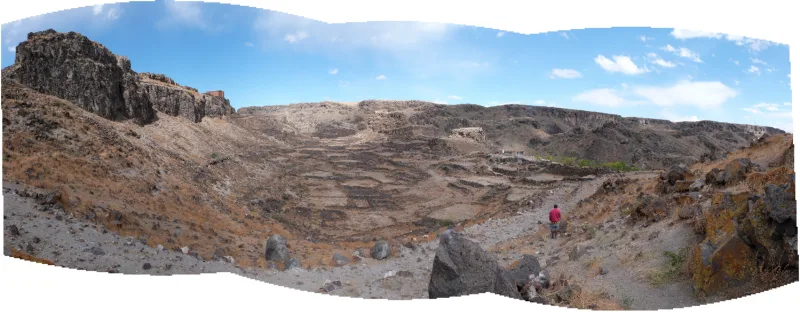
Let’s get this out of the way: Acemhöyük is not Ephesus with its restored library, nor is it Göbekli Tepe with its glass pavilion. There are no admission tickets, ticket booths, or audio guides here, and the security guard is, at best, dozing in the shade. Visitors see exactly what the archaeologists have unearthed: excavation trenches, foundations made of massive stones, and the famous “yellow cliff” of Sarikaya, rising twenty meters above the plain thanks to its sun-glistening mud-brick walls.
The Sarikaya Palace—the heart of Adzhemkheyuk
The main site is the Sarikaya Palace, built on the citadel at the beginning of the Middle Bronze Age IIA. The western part of the building has been completely lost due to later reconstructions and modern activity, but the surviving walls, 1.5 to 2 meters thick, rise to 3.8 meters in places. According to researchers’ estimates, the palace had about fifty rooms. On three sides—north, east, and west—it was surrounded by a portico on marble bases and wooden columns. The ground floor served as storage space: clay bullae with seal impressions were found in every room. The quarters of high-ranking officials were located, as in neighboring Kültepe, on the upper floor.
The Hatipler Palace—the second royal complex
In addition to Sarikaya, a second palace—Hatipler Saray—has been excavated on the hill, with an even more impressive number of rooms: 76. Both buildings were constructed according to a similar plan: massive stone foundations about four meters wide, mud-brick walls one and a half meters thick, and two stories. Dendrochronological analysis showed that Lebanese cedar, juniper, and black pine, felled between 1829 and 1753 BCE, were used for the roof beams. In 2016, radiocarbon and dendrochronological analysis of the wood refined the date of Sarikaya’s main construction: the logs were felled between 1793 and 1784 BCE. This is an invaluable reference point for the entire chronology of the Bronze Age in Anatolia.
Bulls, Seals, and Diplomacy
The true treasure of Acemhoyuk is not the stones, but the clay bullae bearing seal impressions. Seals belonging to Dugedu, daughter of the king of Mari, Yahdun-Lima (c. 1820–1796 BCE), the Assyrian King Shamshi-Adad I (1808–1776 BCE), and the King of Karchemish, Aplahanda (1786–1766 BCE). Sixteen impressions from two of Aplahanda’s cylindrical seals transform the palace into a sort of “diplomatic archive” of the Late Bronze Age. The inscription on one of Shamshi-Adad’s bullae reads: “Šamši-Adad, the appointee of the god Enlil.” In 2012–2013, two Old Assyrian cuneiform tablets dating to around 1700 BCE were found in a service building inside the palace—this was an important indication that archives here still await researchers.
The Early Bronze Age and “Syrian bottles”
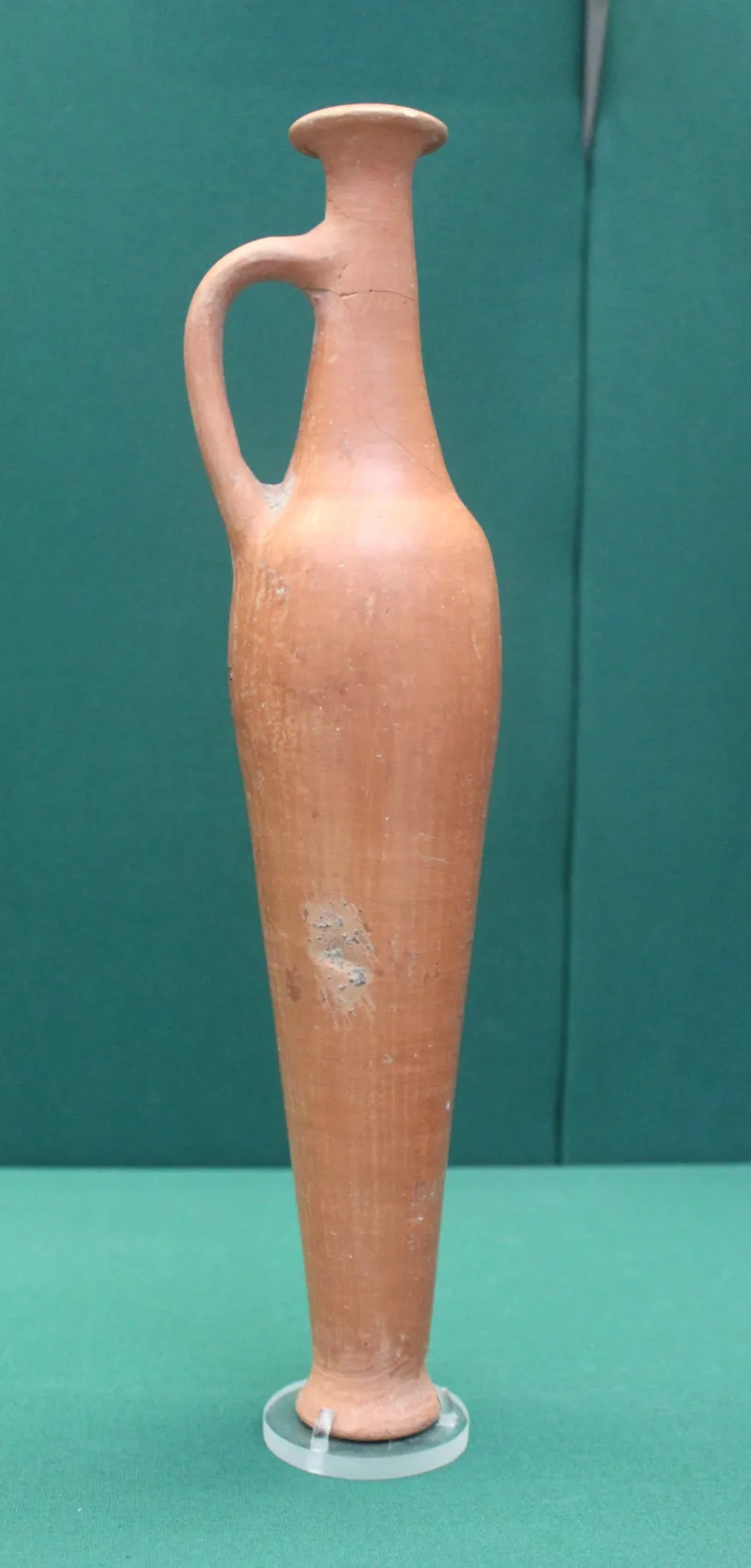
On the southern slope of the hill, archaeologists uncovered a sequence from the Early Bronze Age: stone foundations, mud-brick walls, and compacted earthen floors. This was a rural settlement, yet even then connected to distant lands. From Layer XI comes an elegant vessel in the form of a “Syrian flask”—a type common in Syria and Mesopotamia from the mid-3rd millennium BCE. Such flasks were used for aromatic oils and incense and are usually found in funerary contexts. The find at Adjemkheyuk proves that Central Anatolia was integrated into Mediterranean trade long before the arrival of the Assyrians.
Pratt Ivory—Ivory in New York
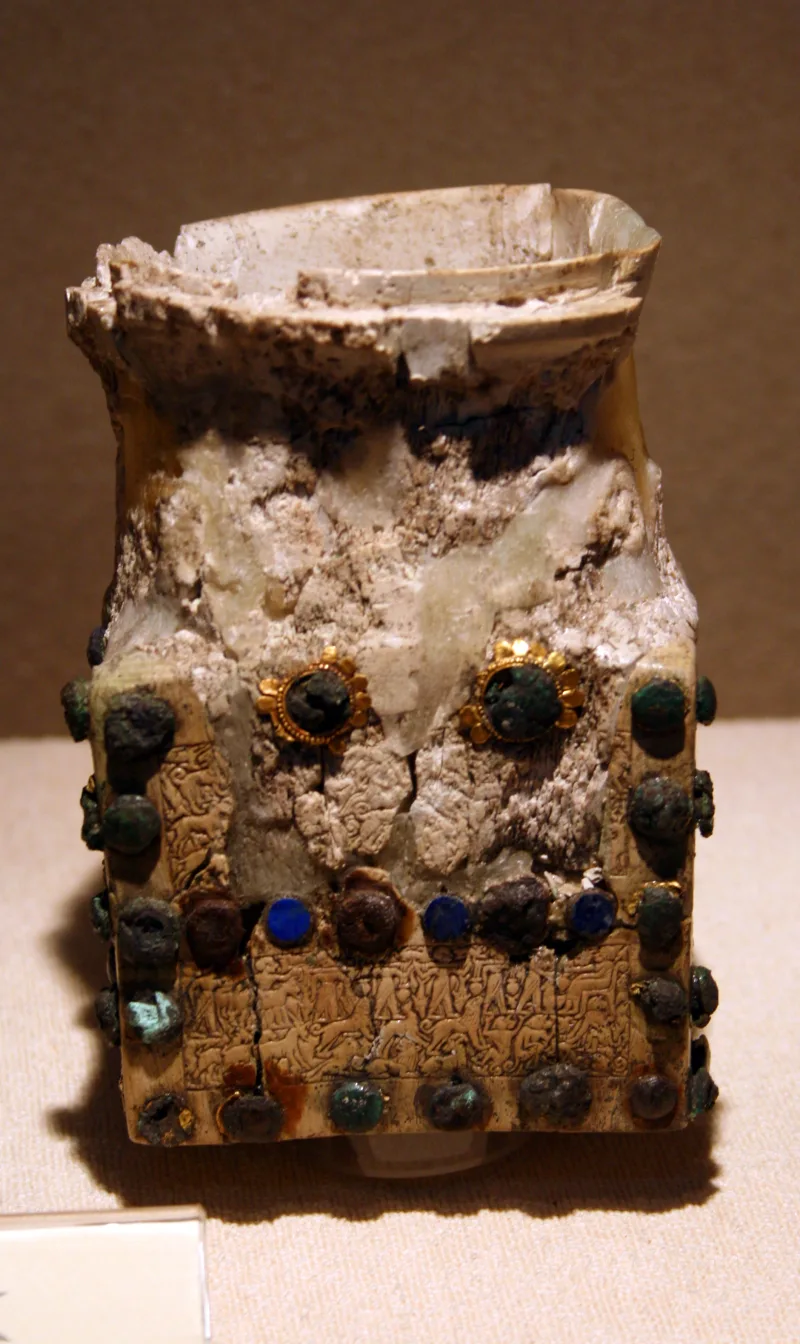
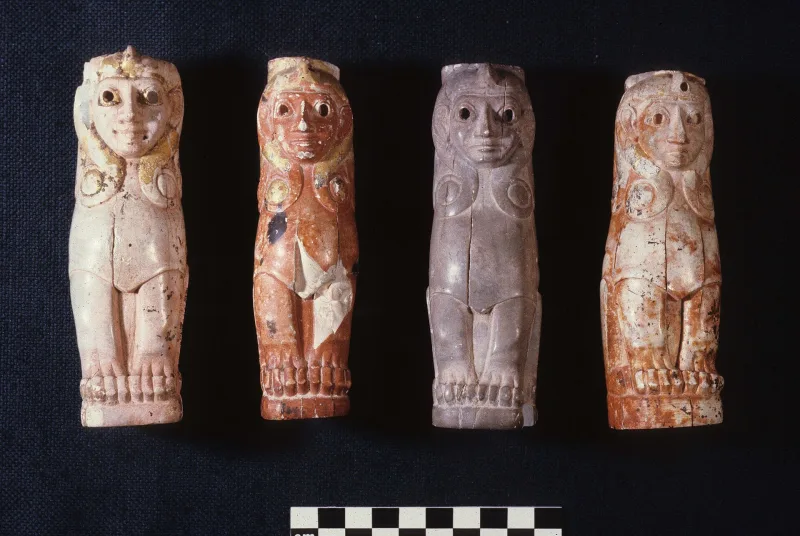
A separate story concerns the “Pratt Ivory”—a collection of carved ivory objects from the 2nd millennium BCE, donated to the Metropolitan Museum of Art in New York by collector George D. Pratt between 1932 and 1937. Researcher Elizabeth Simpson reconstructed a luxurious throne made of gold and ivory from these pieces. In the 1960s, stylistically identical fragments were found in Sarikaya, including a wing that literally matched the falcon from the Pratt collection. It became clear: the items originated from the Acemhöyük palace, which was looted in the early 20th century, and they were linked to the underground antiquities trade. Today, these objects are known as the “Acemhöyük ivories.”
Interesting Facts and Legends
- Many Assyriologists identify Acemhöyük with the city of Purušḫattum, known from cuneiform texts as one of the richest trading hubs in Anatolia. In Hittite tradition, it was near Purušḫattum that the Akkadian king Sargon defeated a coalition of Anatolian rulers—a story recounted in the text “The King of the Battle.”
- The name “Sarikaya” means “yellow rock” in Turkish: the hill does indeed have a yellow hue due to the sun-baked mud bricks made from local clay.
- The bullae of Dugedu, daughter of Yahdun-Lima of Mari, are a rare testament to the fact that royal daughters of that time actively participated in international trade and diplomatic correspondence.
- Researchers consider the “Syrian bottles” from Adjemkheyuk to be the distant ancestors of Hellenistic unguentaria—those very same perfume flasks that are later found in Greek and Roman burials.
- In 2016, it was precisely the logs from the Sarikaya Palace that made it possible to definitively reject the “high” chronology of the Bronze Age: now the overwhelming majority of scholars accept the middle or low chronology, and this is thanks to the Anatolian hill near Yesilova.
How to get there
Acemhöyük is located 18 kilometers northwest of the city of Aksaray, near the village of Eshilova, on a fertile plain along the Uluyrmak River, which flows down from Mount Melendiz. The most convenient airport is Nevşehir Kapadokya (NAV), from which Aksaray is about 90 kilometers and an hour and a half by car; the airports in Kayseri (ASR) and Konya (KYA) are located a bit further away. If you’re flying into Istanbul, you can take a night bus operated by Metro Turizm or Kamil Koç to Aksaray: the trip takes about 10 hours and is significantly cheaper than domestic flights. If you’re already traveling through Cappadocia, it makes sense to combine a visit to Ajemhoyuk with a trip from Göreme to Konya: the detour takes only about an hour, and along the way you’ll see the famous Tuz Gölü salt lake.
From Aksaray to Yesilova, there are infrequent dolmus buses from the bus station (otogar), but it’s more convenient to take a taxi or a rental car—the drive takes about 20 minutes across the plain along Lake Tuz Gölü. It’s best to book a return taxi transfer in advance or arrange with the driver to wait for you: catching a ride near the village isn’t easy. Set your GPS not to “Acemhöyük,” but to the village “Yeşilova, Aksaray": the mound itself is located just south of the residential area, and a distinctive yellow cliff serves as a landmark. There is no conventional parking lot—you leave your car on a dirt lot in front of the village cemetery, then walk up to the excavation site in a couple of minutes.
Tips for travelers
The best time to visit is spring (April–May) and fall (September–October). Central Anatolia turns into a scorching steppe in the summer: daytime temperatures easily exceed 35 degrees, and there is no shade at all on the bare hill. In winter, Aksaray is swept by cold winds, snow often falls, and the dirt paths leading to the excavation site turn into a muddy mess. It’s best to arrive in the morning, before 10 a.m., when the light softly illuminates the yellow bricks of Sari Kaya—for photographers, this is more important than it might seem at first glance.
What to bring: comfortable shoes with sturdy soles (there are constantly stones and shards underfoot), a hat, water, sunscreen, and in the cooler season—a windbreaker: a biting wind often blows in from Lake Tuz Gölü. It’s best to buy food in advance in Aksaray: in Yeshilov there is only a small grocery store, and the nearest full-service restaurants are in the area around Aksaray’s central square, where they serve regional manty and “tandyr kebab” cooked in a clay oven. Be sure to plan a visit to the Aksaray Archaeological Museum—that is where a significant portion of the finds from Adjemkhyuyuk are on display, including amazing bullas and ivory fragments; some artifacts, including pieces of carved furniture, are also housed in the Nigde Archaeological Museum. Without visiting the museum, your experience of the hill itself will be incomplete: on site, you’ll see the “bones” of the monument, and in the museum—its “flesh.”
Russian-speaking travelers should note: there are virtually no signs or information stands in English, let alone Russian. Download the offline Wikipedia page and a map in advance. It’s convenient to combine Ajemkheyuk with the underground city of Derinkuyu (about 70 kilometers), the Ihlara monastery complex (about 50 kilometers), and Cappadocia itself—this makes for a full two-day itinerary through Central Anatolia. And one more thing: respect the site. The mound regularly suffers from "black diggers," so it is forbidden to touch any metal objects found on the surface—you must report them to the caretaker or the Aksaray Museum. Acemhöyük offers a rare experience in Turkey of living, unpolished archaeology, and that is precisely where its true value lies.